A Day in the Life of a CRNA at Cedars-Sinai
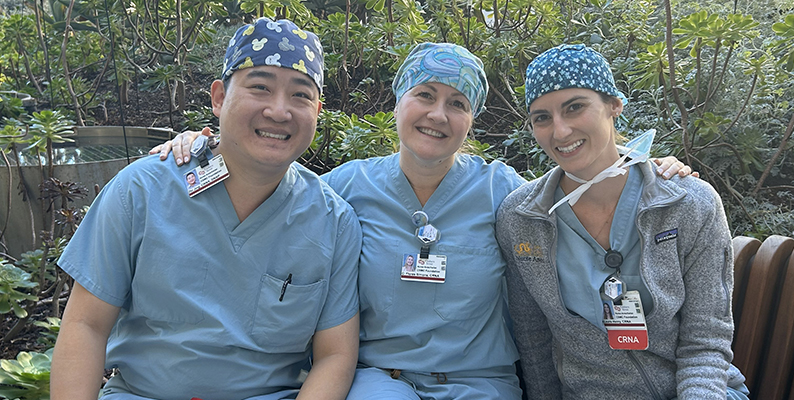
My role as a CRNA
Hi, my name is Cristina, and I’m a Certified Registered Nurse Anesthetist at Cedars-Sinai. I’ve worked here for 12 years, with the past year and a half as a CRNA. In my role, I guide patients safely through some of the most important moments of their care—before, during and after surgery. I know I’ve done my job well when patients wake up comfortable and safe, often unaware of how much active care goes into protecting them.


My typical day
I typically arrive before 7am to prepare for my cases for the day. I may spend the day on a single high-acuity case or manage a lineup of shorter cases. I conduct a detailed chart review to anticipate risks and tailor the plan for each patient. In pre‑op, I explain the anesthetic plan, perform a focused physical assessment, and answer questions to help patients feel safe and reassured. As a preceptor for students, I incorporate teaching on patient‑centered communication, risk assessment, and evidence‑based decision‑making.
Beyond direct care, I serve on the hospital’s Advanced Practice Council, helping advance clinical standards and professional development. I also participate in Grand Rounds, journal clubs, and case conferences with attendings, CRNAs, and trainees to discuss complex cases, quality initiatives, and new research. Each day blends clinical care, teaching, and leadership—delivering safe, compassionate anesthesia while helping train the next generation of CRNAs.
Why Cedars-Sinai?
I began as an ICU nurse here and became a CRNA to build on my critical care skills and be present with patients at pivotal moments in their recovery. As a Level I trauma center with high procedural volume, we care for an exceptionally diverse patient population from transplant and neurosurgical patients to those needing advanced orthopedic and oncologic care. The breadth of pathology and acuity means no two days are alike and every case brings meaningful impact and learning. The culture at Cedars-Sinai is one of strong teamwork and mutual respect between attendings and CRNAs. We value our team outside the OR as well, with regular gatherings, celebrations, and social events that help us connect, recharge, and support one another.

Is CRNA right for you?
For anyone considering this path, I recommend shadowing a CRNA to truly understand the role. Becoming a CRNA is a rigorous journey with a high level of responsibility, but our doctoral-level training prepares us to make independent clinical decisions safely. It’s challenging work—but it’s deeply rewarding.